Antigua Guatemala: 15 Things to Do in the Colonial Jewel of Central America
Antigua Guatemala—known simply as Antigua to most travelers—is one of Central America's most captivating destinations. This UNESCO World Heritage city, nestled in a valley between three towering volcanoes, blends centuries of colonial history with vibrant modern culture, creating an atmosphere that enchants visitors the moment they step onto its cobblestone streets. With its photogenic ruins, world-class coffee, bustling markets, and some of the best food in Guatemala, Antigua deserves a prominent place on any Central American itinerary.
A Brief History
Founded in 1543 as Santiago de los Caballeros de Guatemala, Antigua served as the capital of the Captaincy General of Guatemala—which encompassed most of Central America—for over 200 years. At its peak, it was one of the grandest cities in the Spanish colonial empire, with magnificent churches, monasteries, a university, and elegant homes built to rival those of Mexico City or Lima.
Devastating earthquakes in 1773 (the Santa Marta earthquakes) severely damaged the city and prompted Spanish authorities to relocate the capital to present-day Guatemala City. Many of Antigua's grand buildings were abandoned, and for centuries the city existed as a beautiful but sleepy shadow of its former self. This abandonment proved to be a preservation blessing—without the pressure of being a capital city, much of the colonial architecture survived intact or as romantic ruins that give Antigua its distinctive character today.
15 Must-Do Experiences in Antigua
1. Walk the Cobblestone Streets of the Centro Histórico
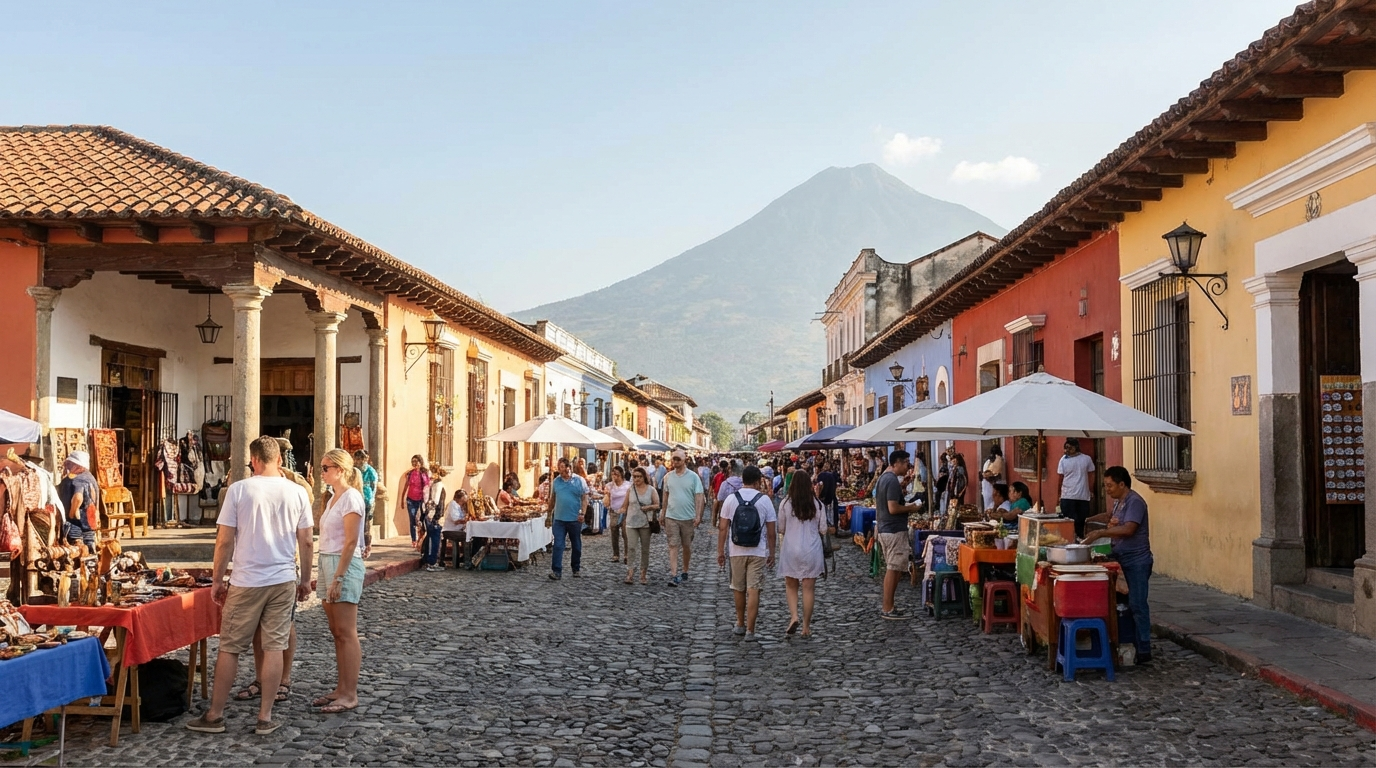
Antigua is a city made for walking. The colonial grid layout, spanning roughly 20 blocks by 20 blocks, means everything is within comfortable walking distance. The cobblestone streets (calles) and avenues (avenidas) are lined with colorful painted buildings in shades of yellow, terracotta, blue, and pink, their lower halves often worn to expose the stone beneath. Every turn reveals another stunning view—a volcano framed between colonial facades, a crumbling arch draped in bougainvillea, a hidden courtyard glimpsed through an open doorway.
The best time for a walk is early morning, when the light is golden, the streets are quiet, and the volcanoes are most likely to be free of clouds. Start at the central Parque Central, grab a coffee, and simply wander. Getting lost in Antigua is one of its greatest pleasures—and you're never more than a few blocks from a landmark to orient yourself.
2. Visit the Arco de Santa Catalina
The iconic yellow arch spanning 5a Avenida Norte is Antigua's most photographed landmark. Built in the 17th century to allow cloistered nuns of the Santa Catalina convent to cross the street without being seen by the public, the arch now frames a picture-perfect view of the Volcán de Agua to the south. Come early for photos without crowds, or at sunset when the warm light makes the yellow stone glow.
3. Explore the Ruins of the Cathedral of San José
Originally built in 1545 and rebuilt several times following earthquake damage, the Cathedral of San José sits on the east side of Parque Central. While the front portion still functions as an active church, the vast ruins behind it are open for exploration. Massive stone columns, roofless chambers, and overgrown courtyards create a hauntingly beautiful space that gives you a visceral sense of Antigua's turbulent history. The small entrance fee is well worth it.
4. Shop at the Mercado de Artesanías
For souvenirs and handcrafted goods, the Artisan Market near the main bus terminal is hard to beat. Stalls overflow with hand-woven textiles, jade jewelry, carved wooden masks, leather goods, pottery, and traditional huipiles (Maya blouses) in every color imaginable. Bargaining is expected and part of the fun—start at about 60% of the asking price and work toward a mutually agreeable deal. The quality of Guatemalan textiles is exceptional, and the vivid colors and intricate patterns make them standout gifts.
5. Take a Coffee Tour
Antigua is surrounded by some of Guatemala's finest coffee farms, and visiting one is essential to understanding why Guatemalan beans are revered worldwide. Several farms offer tours ranging from quick overviews to immersive half-day experiences that cover cultivation, processing, roasting, and tasting. Finca Filadelfia and De La Gente are two popular options, each offering different perspectives—the former is a large-scale operation with beautiful grounds, while the latter focuses on small-scale cooperative farming and community development.
For a quick but excellent coffee experience without leaving town, visit one of Antigua's many specialty cafés. Café Barista, Artisan, and Fat Cat Coffee House all source directly from nearby farms and offer expert preparation.
6. Hike Volcán Pacaya
The most accessible of Guatemala's active volcanoes, Pacaya offers a relatively manageable hike (about 2-3 hours to the summit) with extraordinary rewards. Depending on current volcanic activity, you may walk across still-warm lava fields, see red-hot lava flows up close, or roast marshmallows over volcanic vents. The summit views encompass the entire Antigua valley and, on clear days, the Pacific coast.
Tours depart daily from Antigua and typically include transportation, guide fees, and park entrance. The hike is moderately strenuous—decent fitness is helpful, but no technical skills are required. Bring layers, as temperatures drop significantly at altitude, and sturdy shoes for the rocky terrain.
7. Photograph the Ruins of La Recolección
While less visited than some of Antigua's other ruins, La Recolección (the Recollection monastery) is arguably the most photogenic. The massive arched facade still stands nearly intact, framing views of the sky and surrounding trees. Inside, enormous stone blocks toppled by earthquakes lie scattered across grassy grounds, creating an atmosphere that's equal parts solemn and beautiful. The low afternoon light filtering through the broken walls makes this a photographer's paradise.
8. Take a Cooking Class
Guatemalan cuisine is diverse, flavorful, and largely underappreciated on the world stage. Several cooking schools in Antigua offer hands-on classes where you'll learn to prepare traditional dishes like pepián (a rich, spiced meat stew considered Guatemala's national dish), tamales, rellenitos (sweet plantain and black bean dessert), and fresh tortillas made from scratch on a comal.
Classes typically begin with a visit to the local market to select fresh ingredients, followed by several hours of cooking and eating. It's a wonderful way to connect with Guatemalan culture through food and to bring home skills that will impress friends and family.
9. Watch the Sunset from Cerro de la Cruz
The Hill of the Cross (Cerro de la Cruz) on Antigua's northern edge offers the classic panoramic viewpoint over the city with Volcán de Agua rising majestically behind it. The hike up is short (about 20 minutes) and the path is well-maintained. Time your visit for late afternoon to catch the golden light over the colonial rooftops, and stay for sunset when the sky often erupts in spectacular colors.
The viewpoint has improved significantly in terms of safety in recent years, with regular police patrols and a tourist assistance booth. Still, it's best to go in a group or as part of the free walking tour that includes this stop.
10. Explore the Church and Convent of La Merced
La Merced is Antigua's most ornate church, featuring an intricate baroque facade painted in bright yellow and white stucco. The church itself is still active and free to enter, while the adjacent convent ruins require a small entrance fee. The convent's highlight is an enormous stone fountain—one of the largest in Latin America—surrounded by the crumbling walls of what was once a vast religious complex. The contrast between the intact church and the ruined convent perfectly encapsulates Antigua's character.
11. Experience Semana Santa (If Timing Allows)
If your visit coincides with Holy Week (the week before Easter), you'll witness one of the most spectacular cultural events in the Americas. Antigua's Semana Santa celebrations are famous for their elaborate alfombras—intricate carpets made from dyed sawdust, flowers, fruits, and pine needles that line the streets along procession routes. Teams work through the night creating these stunning artworks, which are then walked over by solemn processions carrying massive wooden floats depicting biblical scenes.
The processions involve thousands of participants in purple and white robes, accompanied by bands playing mournful brass music. The combination of visual beauty, devotion, and the knowledge that each alfombra exists for only a few hours before being destroyed makes Semana Santa an incredibly moving experience. Book accommodation months in advance if planning a Holy Week visit—the entire city fills to capacity.
12. Learn Spanish
Antigua is one of the world's most popular destinations for Spanish language study, and for good reason. The combination of affordable one-on-one instruction, a safe and walkable city, abundant cultural activities, and the opportunity to practice with locals makes it an ideal learning environment. Dozens of schools offer programs ranging from a few hours of casual tutoring to intensive multi-week courses with homestay options.
Prices are remarkably affordable—expect to pay $8-15 per hour for private one-on-one instruction with a qualified teacher. Many schools also arrange volunteer placements, salsa classes, cooking lessons, and excursions that complement language learning with cultural immersion.
13. Visit the Jade Museum and Workshop
Jade was the most precious material in ancient Maya civilization—more valuable than gold. The Jade Museum (Casa del Jade) in Antigua houses an impressive collection of pre-Columbian jade artifacts alongside replicas of famous Maya jade masks and jewelry. The attached workshop allows you to observe artisans using traditional techniques to carve and polish jade, and the adjoining shop sells everything from affordable small pieces to museum-quality jewelry.
Guatemala is the only source of the distinctive blue-green jadeite variety that the ancient Maya prized, making Guatemalan jade a meaningful and unique souvenir that connects directly to thousands of years of cultural heritage.
14. Eat Your Way Through the Restaurant Scene
Antigua punches far above its weight in the culinary department. The city's restaurant scene ranges from humble comedores (local eateries) serving Q25 set lunches to sophisticated dining rooms that would hold their own in any major city. Some highlights:
15. Day Trip to Lake Atitlán
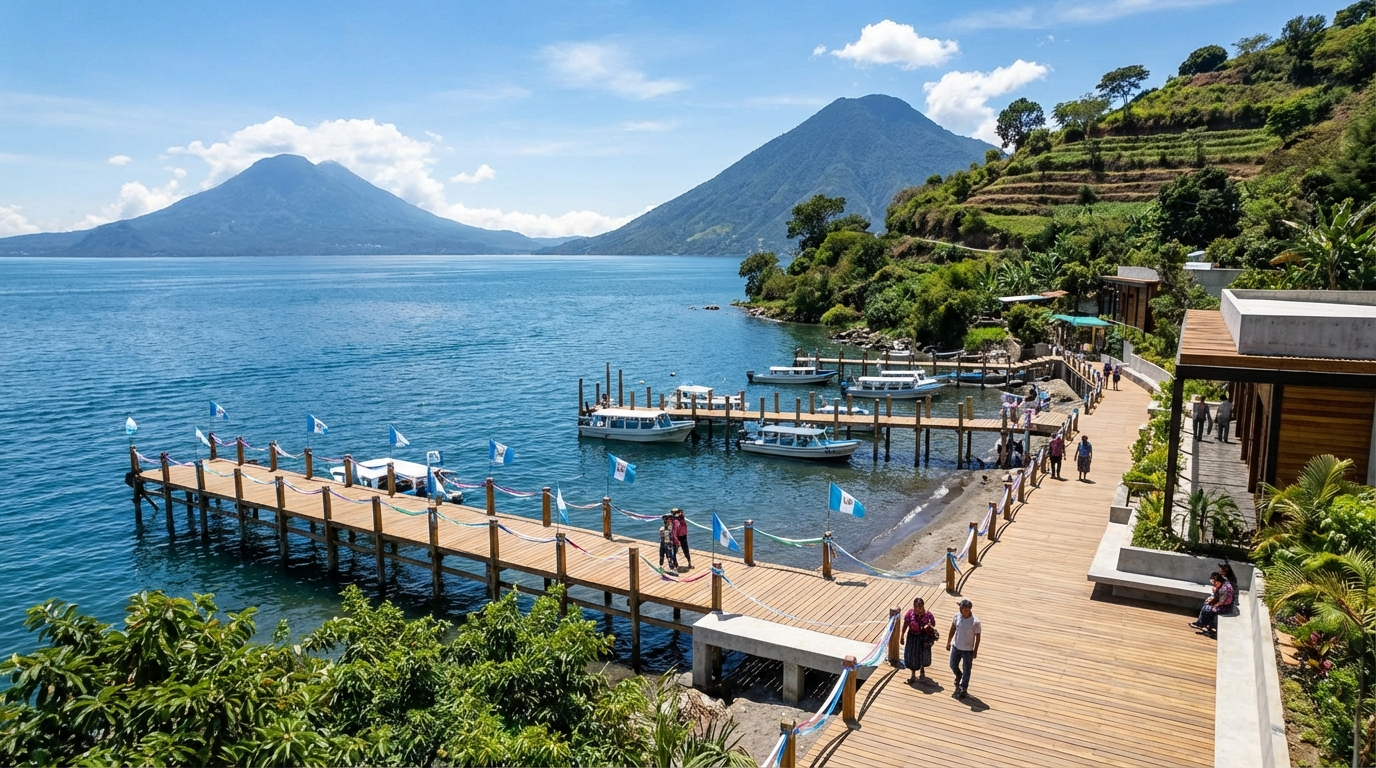
While Lake Atitlán deserves several days of its own, a day trip from Antigua is absolutely worthwhile if time is limited. The drive takes approximately 2.5 hours through beautiful highland scenery, arriving at Panajachel—the main tourist gateway to the lake. From there, lanchas (boats) connect to lakeside villages, each with its own personality: San Juan La Laguna for art cooperatives, San Marcos for yoga retreats, Santiago Atitlán for traditional Maya culture.
The lake itself, surrounded by volcanic peaks and traditional Maya villages, is one of the most visually stunning places in all of the Americas. Alexander von Humboldt reportedly called it "the most beautiful lake in the world," and while such claims are always debatable, it's hard to argue once you're standing on its shore watching the afternoon clouds drift around the volcanic summits.
Practical Information for Visiting Antigua
Antigua Guatemala is one of those rare places that lives up to every expectation and then exceeds them. Its combination of history, beauty, culture, food, and accessibility makes it not just one of Guatemala's essential destinations, but one of the great small cities of the Americas. Whether you come for a weekend or a month, Antigua will leave its mark on you.
Artículos relacionados
Hoteles Boutique en Antigua Guatemala: Guía Completa 2026
Pueblos Mágicos de Guatemala: Descubre los Destinos Más Encantadores del País
Descubre los pueblos más encantadores de Guatemala: Chichicastenango, Flores, San Juan La Laguna y más. Guía completa con costos, actividades y consejos de viaje para 2026.

Guatemala Coffee Regions: A Complete Guide to the Best Beans in Central America
Explore Guatemala's world-renowned coffee regions, from Huehuetenango to Antigua, and discover what makes Guatemalan beans among the finest on Earth.