
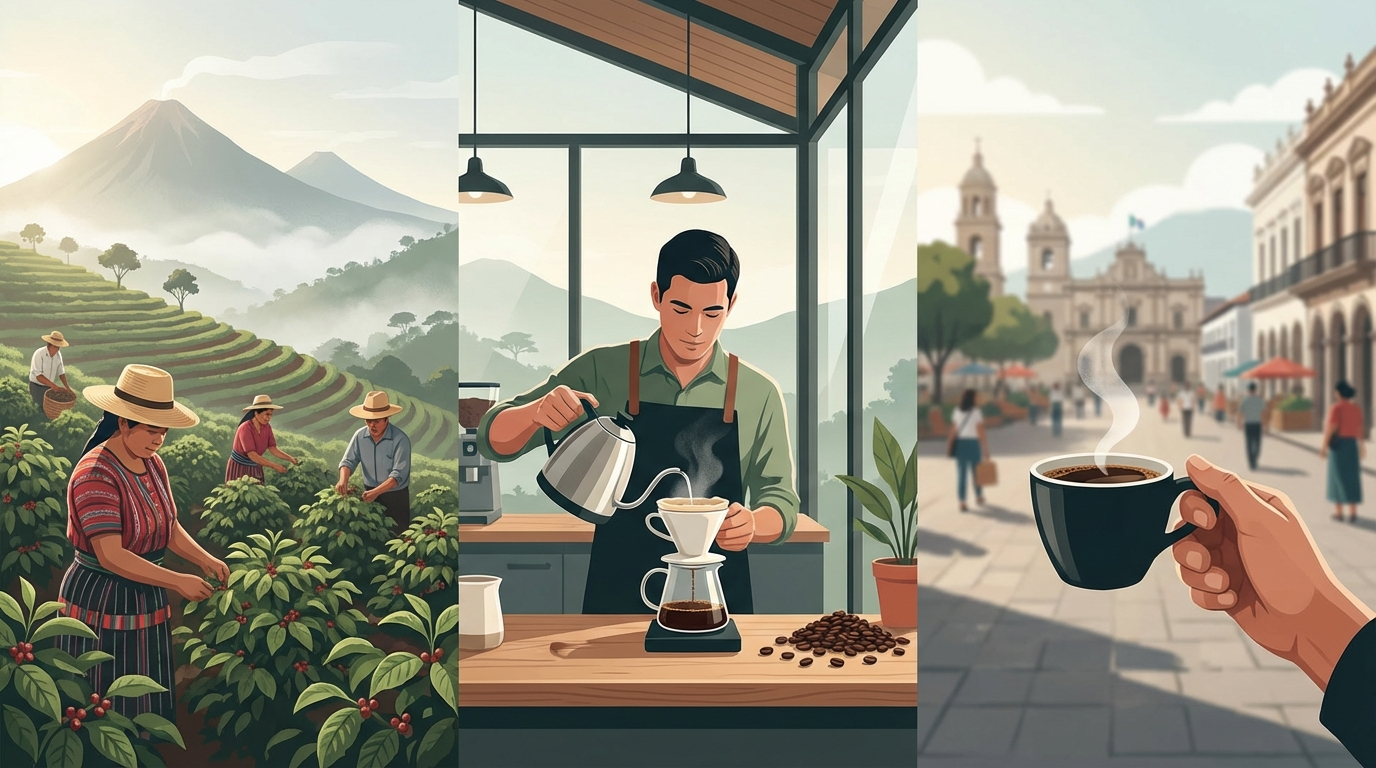
Guatemala Coffee Culture: From Farm to Cup in the Land of Eternal Spring
Why Guatemala Produces Some of the World's Best Coffee
Guatemala consistently ranks among the top ten coffee-producing countries in the world, and for good reason. The country's unique combination of volcanic soil, high altitudes, distinct microclimates, and centuries of cultivation expertise creates conditions that produce exceptionally complex and flavorful coffee beans.From the misty highlands of Huehuetenango to the volcanic slopes of Antigua, Guatemala's eight distinct coffee-growing regions each contribute unique flavor profiles that have earned recognition from specialty coffee buyers worldwide.
A Brief History of Guatemalan Coffee
Coffee arrived in Guatemala in the mid-18th century, brought by Jesuit missionaries. By the 1850s, coffee had become the country's primary export crop, a position it held for over a century. The coffee industry shaped Guatemala's economic development, infrastructure, and social structure in profound ways.Today, Guatemala produces approximately 3.5 million 60-kilogram bags of coffee annually, with the majority classified as Strictly Hard Bean (SHB) — a designation indicating beans grown above 1,350 meters that are denser and more flavorful than lower-altitude varieties.
Guatemala's Eight Coffee Regions
Antigua
Perhaps Guatemala's most famous coffee region, Antigua sits in a valley surrounded by three volcanoes: Agua, Fuego, and Acatenango. The volcanic pumice soil, consistent temperatures, and low humidity create ideal conditions for producing coffee with a rich body, chocolate notes, and a gentle sweetness.Huehuetenango
In Guatemala's western highlands, the Huehuetenango region produces coffee at altitudes reaching 2,000 meters. These extreme elevations create beans known for their bright acidity, wine-like qualities, and complex fruit notes. Huehuetenango has become a darling of third-wave coffee roasters worldwide.Cobán (Rainforest Cobán)
The Cobán region receives more rainfall than any other coffee zone in Guatemala. This perpetually cloudy environment produces distinctively smooth coffee with mild acidity, medium body, and delicate floral notes.Atitlán
Grown on the volcanic shores of Lake Atitlán, coffee benefits from the thermal winds known as Xocomil. The volcanic soil produces beans with a full body, nutty flavors, and citrus-like acidity.San Marcos, Fraijanes, Nuevo Oriente, and Acatenango
Each of these regions contributes unique profiles — from San Marcos's floral aromas to Fraijanes's sharp acidity, Nuevo Oriente's chocolate notes, and Acatenango's exceptional micro-lots sought by specialty roasters.Coffee Farm Experiences
Finca Filadelfia in Antigua offers comprehensive tours through every stage of production. Finca El Injerto in Huehuetenango, a multiple Cup of Excellence winner, shows cutting-edge sustainable production. Community cooperatives around Cobán and Lake Atitlán offer cultural exchange alongside coffee learning.Guatemala's Specialty Coffee Scene
Guatemala City and Antigua have vibrant third-wave coffee scenes. Notable shops include Paradigma Coffee in the capital and Fat Cat Coffee House in Antigua. The annual Cup of Excellence competition draws international buyers.The Future of Guatemalan Coffee
Climate change poses challenges, but producers are responding with climate-resistant varieties, agroforestry, and the growing direct trade movement connecting roasters with individual farms.Planning Your Coffee Tour
- Day 1-2: Antigua — Finca Filadelfia, specialty shops
- Day 3-4: Lake Atitlán — Community coffee tour, cupping in San Pedro
- Day 5-6: Cobán — Rainforest coffee, Chicoj cooperative
- Day 7: Guatemala City — Coffee shop crawl
Guatemala's coffee culture connects indigenous heritage, volcanic landscapes, and global gastronomy. Plan your coffee adventure today.
Artículos relacionados
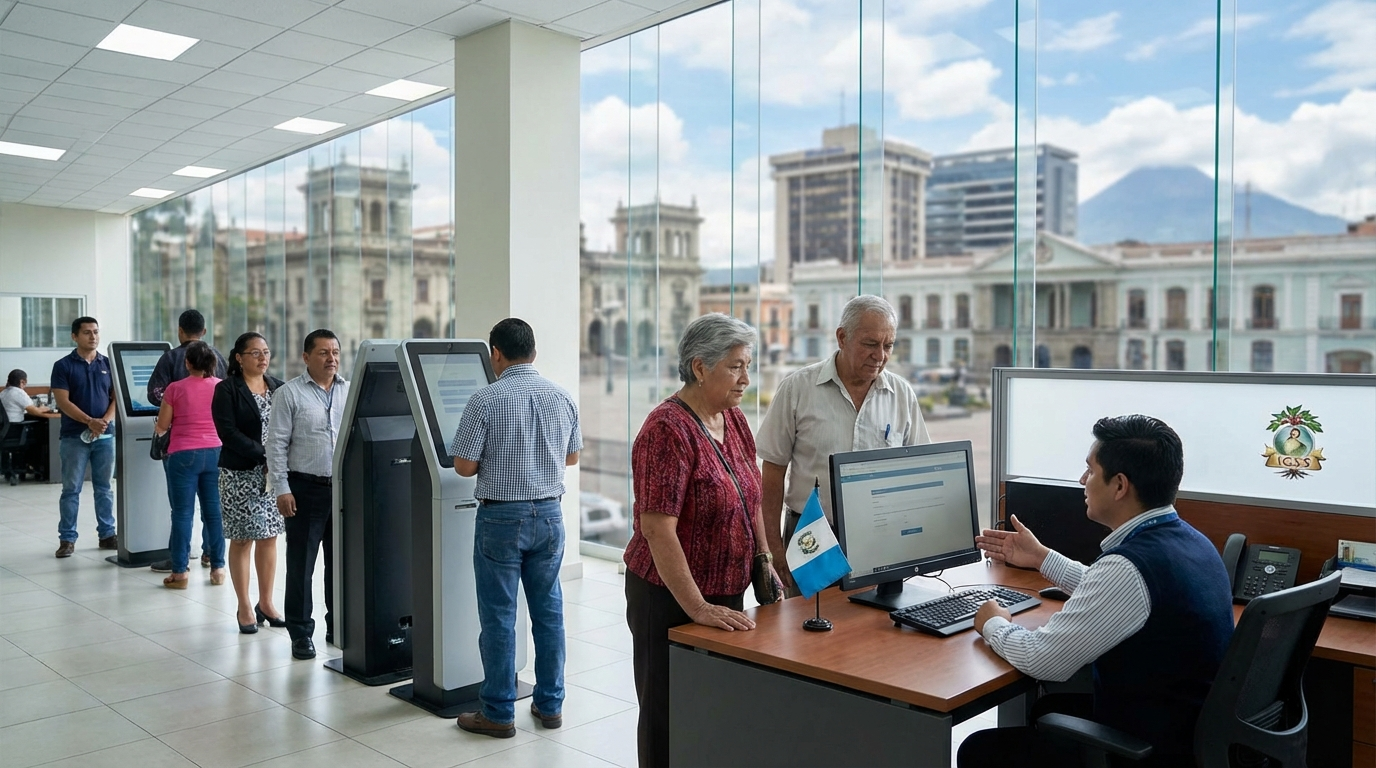
Trámites del IGSS Guatemala 2026: Guía Completa de Pensiones, Prestaciones y Afiliación
Guía actualizada 2026 de trámites IGSS Guatemala: pensión por vejez, subsidios por maternidad e incapacidad, afiliación. Requisitos y pasos.

IGSS vs Seguro Médico Privado Guatemala 2026: ¿Cuál Conviene Más?
Comparativa completa IGSS vs seguro médico privado en Guatemala 2026. Costos, coberturas, ventajas y desventajas. ¿Cuál es mejor para tu familia?
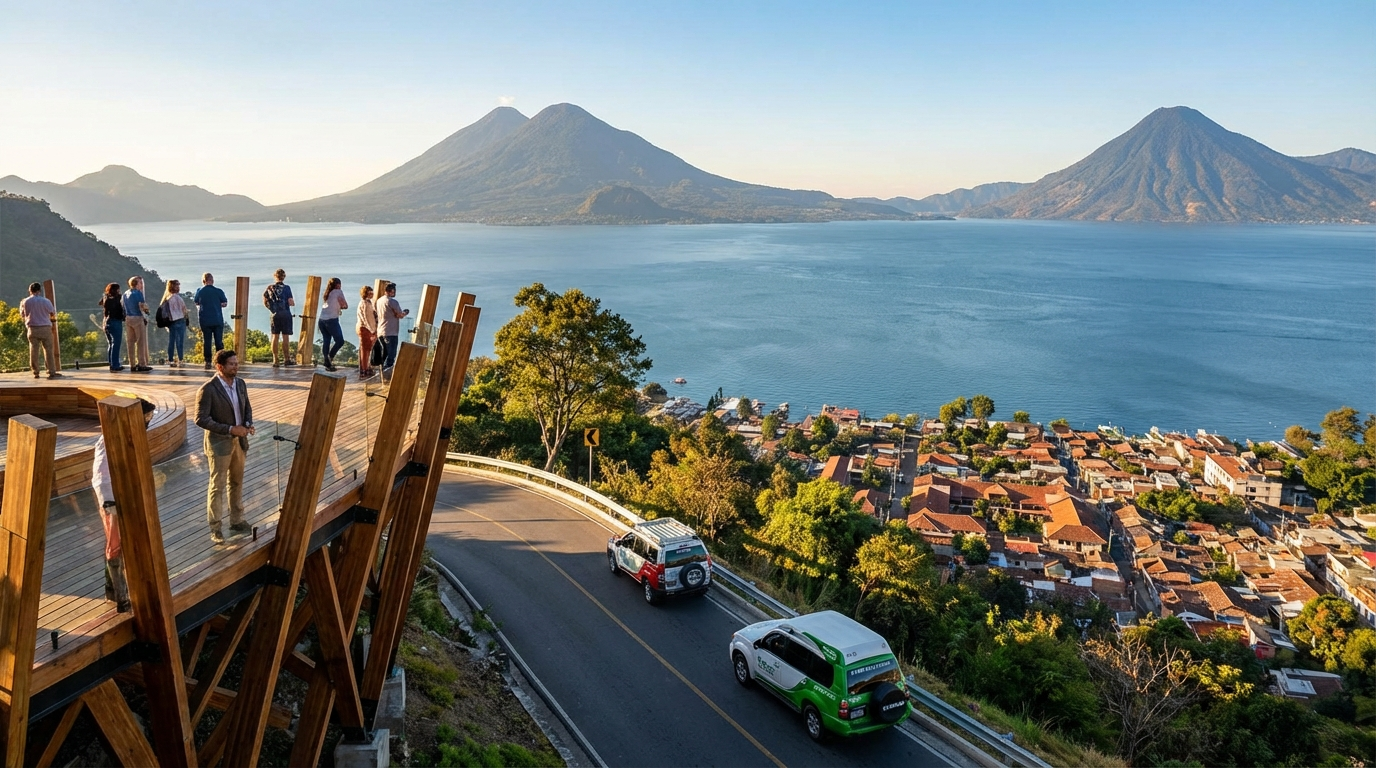
Turismo Guatemala Novedades: Lo Más Reciente para Tu Próxima Aventura
Guatemala, el Corazón del Mundo Maya, se reinventa constantemente para ofrecer a sus visitantes experiencias únicas. Exploramos las últimas novedades en turismo que transformarán tu próxima aventura.

Tráfico Guatemala Hoy: Rutas Alternas y Guía para Navegar la Ciudad
Navegar el tráfico en Guatemala puede ser un desafío diario. Esta guía te ofrece las mejores rutas alternas, herramientas y consejos para optimizar tu tiempo y evitar la congestión.