
A Complete Guide to Guatemala's Traditional Markets: Where Culture Comes Alive
Step Into the Beating Heart of Guatemalan Culture
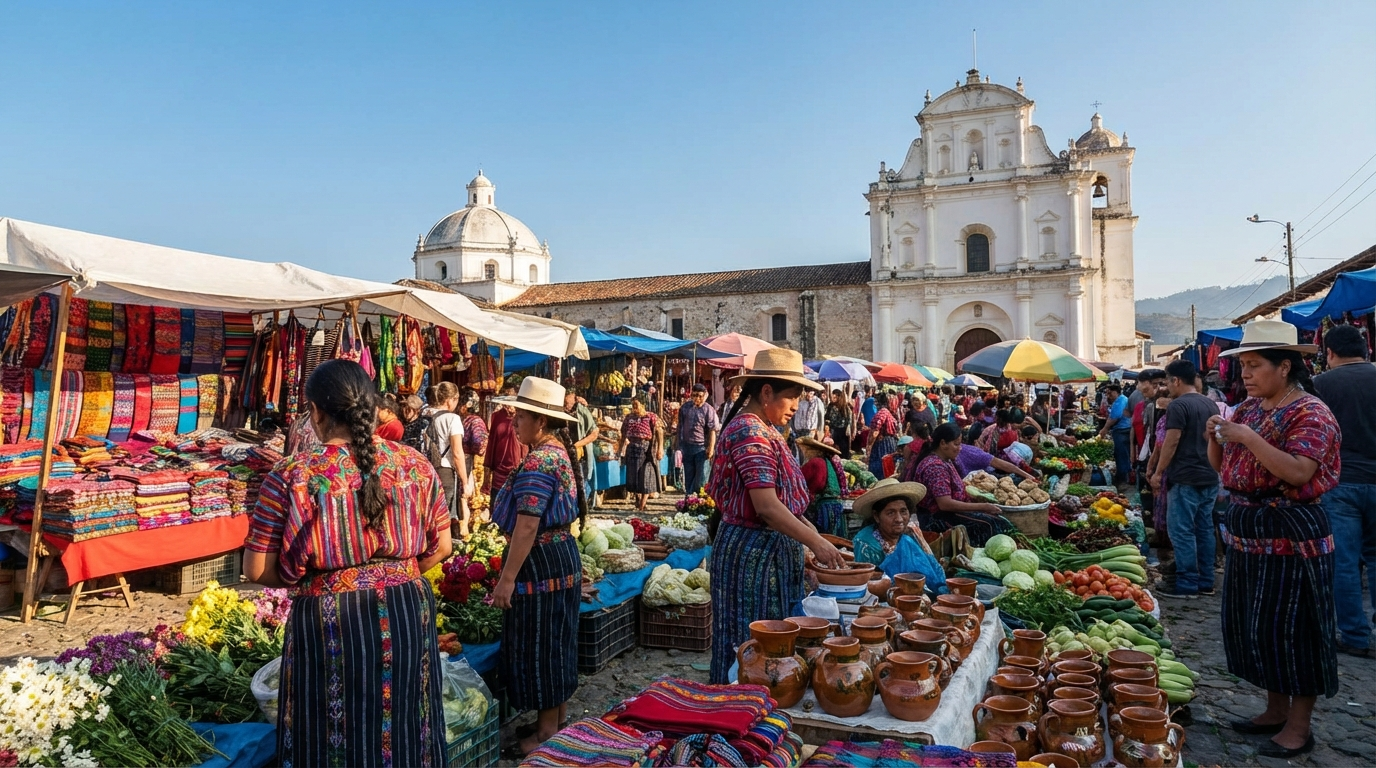
If you want to understand Guatemala — truly understand it, beyond the tourist brochures and Instagram feeds — visit a market. Guatemala's traditional markets are not merely places of commerce; they are the living, breathing heart of Maya culture, where traditions that predate European contact continue to pulse with vitality. In these vibrant spaces, ancient trading practices blend with modern life, indigenous languages fill the air, and the colors, aromas, and textures create a sensory experience unlike anything else in the Americas.
Market culture is deeply embedded in Guatemala's identity. Long before Spanish colonization, Maya communities maintained sophisticated trading networks that connected highland and lowland civilizations across Mesoamerica. Cacao, jade, obsidian, quetzal feathers, and textiles moved through these networks, creating economic bonds between diverse communities. Today's markets are the direct descendants of these ancient trading traditions, adapted to modern needs but retaining their essential character as spaces of exchange, socialization, and cultural expression.
This comprehensive guide explores Guatemala's most extraordinary markets, from the famous highland textile markets to lesser-known regional gems, providing everything you need to navigate these cultural treasures with confidence and respect.
Chichicastenango Market — The Crown Jewel
No guide to Guatemalan markets would be complete without Chichicastenango, and for good reason. Held every Thursday and Sunday in the highland town of Santo Tomás Chichicastenango, this market is one of the largest and most visually spectacular indigenous markets in the Americas. On market days, the normally quiet town transforms into a kaleidoscope of color and activity as thousands of vendors and buyers converge from across the highlands.
The market spreads across the town's streets and plazas, with different areas dedicated to different products. The main plaza and surrounding streets are dominated by textile vendors selling everything from traditional huipiles and cortes (wraparound skirts) to modern adaptations of Maya designs for the international market. The quality ranges from mass-produced souvenirs to museum-quality hand-woven pieces, and knowing what to look for is essential.
To identify genuine handwoven textiles, examine the back of the fabric — authentic backstrap loom work shows the reverse pattern clearly, while printed imitations will be blank or blurred on the reverse. Feel the weight of the fabric; handwoven textiles are typically heavier and denser than machine-made alternatives. Look for slight irregularities in the pattern, which indicate hand production. And don't hesitate to ask vendors about the origin and technique — legitimate artisans are proud of their work and happy to discuss it.
Beyond textiles, Chichicastenango's market offers pottery, carved wooden masks, leather goods, traditional medicines, fresh produce, flowers, and ceremonial items. The flower and incense vendors on the steps of the Santo Tomás Church create one of the market's most iconic images, with cascades of marigolds and rose petals framing the church entrance while copal incense smoke drifts across the plaza.
The church itself is a remarkable cultural site. Built on the foundations of a pre-Columbian Maya temple, Santo Tomás Church hosts a unique blend of Catholic and Maya religious practices. On market days, Maya spiritual leaders (ajq'ijab') perform ceremonies on the church steps, burning incense and offering prayers in K'iche' Maya alongside Catholic services happening inside. This syncretism, practiced openly and without conflict, is a powerful demonstration of Guatemala's cultural complexity.
Sololá Market — The Authentic Highland Experience
While Chichicastenango attracts international tourists, the Tuesday and Friday market in Sololá remains primarily a local affair, offering a more authentic glimpse into highland Maya commerce. Sololá, the departmental capital overlooking Lake Atitlán, draws traders from across the Sololá, Quiché, and Totonicapán departments, creating a diverse gathering that represents multiple Maya linguistic and cultural groups.
The Sololá market is particularly notable for its traditional men's clothing — one of the few markets where you can see and purchase the distinctive male trajes (traditional outfits) that are increasingly rare in other communities. Sololá men's traje includes embroidered shirts, woven sashes, and distinctive split-front overpants that are unique to the region. The craftsmanship is extraordinary, and the sight of hundreds of men in full traditional dress going about their market business is deeply impressive.
The food section of the Sololá market is expansive and fascinating. Highland produce dominates — enormous varieties of potatoes, corn in every color from white to deep purple, beans, squash, and herbs used in traditional medicine and cooking. The prepared food stalls offer authentic highland cuisine at remarkably low prices: a full meal of pepián (a rich sauce of toasted sesame seeds, peppers, and spices over chicken), black beans, rice, and handmade tortillas rarely costs more than 20-25 quetzales ($2.50-3.00).
San Francisco El Alto — Central America's Largest Market
If Chichicastenango is the most famous market and Sololá the most authentic, then San Francisco El Alto is the most overwhelming. Held every Friday in this small highland town near Quetzaltenango, the San Francisco El Alto market is the largest open-air market in Central America, attracting an estimated 20,000-30,000 people on busy days.
The market literally takes over the entire town. Streets, plazas, rooftops, and even the cemetery are converted into selling spaces. The market operates on multiple levels: the rooftop market above the main commercial building is famous for selling used clothing imported from the United States (known as "paca" or "ropa americana"), while street-level markets focus on textiles, electronics, housewares, and livestock.
Yes, livestock. The animal market on the town's outskirts is a remarkable scene where cattle, horses, pigs, sheep, goats, and chickens change hands in a noisy, chaotic, and utterly fascinating display of rural commerce. Watching Maya farmers examine animals with expert eyes, negotiate prices with elaborate gestures, and seal deals with handshakes is witnessing a trading tradition that has continued unbroken for centuries.
The sheer scale of San Francisco El Alto can be disorienting, and navigating the narrow, crowded streets requires patience and awareness of your belongings. But for travelers seeking an authentic, unfiltered market experience untouched by tourist influence, there is simply nothing else like it in Guatemala.
Antigua Guatemala Markets — Colonial Charm Meets Commerce
Antigua's market scene operates on two levels. The main municipal market (Mercado del Carmen) functions daily as the town's primary food and household goods market, while a more tourist-oriented artisan market operates nearby. For visitors, the combination offers both authentic local atmosphere and convenient souvenir shopping.
The municipal market is a fantastic place to practice Spanish, sample street food, and observe daily Antigüeño life. The comedores (food stalls) inside the market serve some of the best-value food in town — plates of grilled meats, tamales, chuchitos (Guatemalan-style small tamales), and fresh fruit smoothies at a fraction of restaurant prices. The produce section showcases Guatemala's agricultural diversity, with tropical fruits, highland vegetables, and herbs arranged in colorful displays.
The artisan market and the various jade and textile shops along Antigua's streets offer a curated selection of Guatemalan crafts at higher prices than highland markets but with more convenience and quality control. For first-time visitors to Guatemala, Antigua's market scene provides a gentle introduction before venturing into the more intense highland markets.
Santiago Atitlán Market — Where Commerce Meets Cosmology
The daily market in Santiago Atitlán, the largest Tz'utujil Maya town on Lake Atitlán, combines everyday commerce with deep cultural significance. The market fills the streets leading from the town dock to the central plaza, with vendors selling fresh fish from the lake, produce from surrounding farms, and the distinctive purple-toned textiles that are Santiago's trademark.
What makes Santiago's market unique is its integration with the town's rich ceremonial life. Santiago is home to the cult of Rilaj Mam (Maximón), a syncretic deity whose shrine receives daily offerings of cigars, liquor, and candles. On important ceremonial days, the market takes on an additional spiritual dimension as processions, rituals, and celebrations flow through the commercial spaces, blurring the line between sacred and secular.
The market is also an excellent place to observe traditional gender-specific clothing. Women wear huipiles with elaborate purple brocade and the distinctive tocoyal head wrapping, while men may wear striped trousers and embroidered shirts that are specific to Santiago. The visual effect of hundreds of people in traditional dress going about their market business against the backdrop of volcanic peaks is unforgettable.
Almolonga Market — The Vegetable Capital
The small town of Almolonga, near Quetzaltenango, is known throughout Guatemala as the vegetable capital of the country. The town's fertile volcanic soil and abundant water supply produce vegetables of extraordinary size and quality, and the market is a celebration of agricultural abundance.
The sight of enormous cabbages, carrots the size of your forearm, and radishes that weigh several kilograms is genuinely astonishing. The market's scale is impressive for such a small town — on the main market day (Saturday), the vegetable trade attracts wholesale buyers from across the country, and the street-side displays of produce create a colorful spectacle that rivals any flower market.
How to Navigate Guatemalan Markets
Bargaining Etiquette
Bargaining is an integral part of market culture, but it's important to approach it with respect and good humor. A reasonable starting offer is typically 60-70% of the asking price, with both parties working toward a middle ground. Aggressive bargaining over small amounts is considered rude and disrespectful of the artisan's labor. Remember that a few quetzales mean much more to the vendor than to you.
Photography
Always ask permission before photographing people, especially in indigenous communities where photography can be a sensitive issue. Many vendors are happy to be photographed, especially if you've made a purchase, but others may decline. Respect their wishes without argument. Never photograph religious ceremonies without explicit permission from participants.
What to Buy
Guatemala's markets offer extraordinary craft traditions. Textiles are the obvious choice — hand-woven huipiles, table runners, scarves, and bags make beautiful and meaningful souvenirs. Jade jewelry, carved wooden masks, pottery from the Chinautla tradition, and leather goods are also excellent purchases. For foodies, Guatemalan coffee, chocolate, and spice blends (particularly recado — traditional spice pastes) are excellent take-home items that pack flat and keep well.
Safety
Markets are generally safe, but the crowds attract pickpockets. Keep valuables in front pockets or a secure crossbody bag, be aware of your surroundings, and avoid displaying expensive electronics. Travel in pairs or groups when possible, and let your hotel know which market you're visiting.
Market Calendar: Planning Your Visit
Most towns have daily markets, but the days listed above are the main market days when activity peaks. Arrive early (before 9 AM) for the best selection and most pleasant shopping conditions.
More Than Shopping: Markets as Cultural Encounters
Guatemala's traditional markets are far more than commercial venues — they are the spaces where indigenous culture is most vibrantly alive. In markets, Maya languages dominate over Spanish, traditional dress is the norm rather than the exception, and ancient trading customs continue as they have for millennia. A morning spent in a Guatemalan market provides deeper cultural insight than a week of museum visits.
Approach your market visits with curiosity, respect, and openness. Learn a few words in the local Maya language. Accept the slow pace of transactions as an opportunity for human connection rather than an inconvenience. Try unfamiliar foods, ask questions about textiles and crafts, and allow yourself to get happily lost in the labyrinth of stalls and streets. Guatemala's markets have been welcoming traders and visitors for thousands of years. They're ready to welcome you too.
Artículos relacionados
Trámites del IGSS Guatemala 2026: Guía Completa de Pensiones, Prestaciones y Afiliación
Guía actualizada 2026 de trámites IGSS Guatemala: pensión por vejez, subsidios por maternidad e incapacidad, afiliación. Requisitos y pasos.
IGSS vs Seguro Médico Privado Guatemala 2026: ¿Cuál Conviene Más?
Comparativa completa IGSS vs seguro médico privado en Guatemala 2026. Costos, coberturas, ventajas y desventajas. ¿Cuál es mejor para tu familia?
Turismo Guatemala Novedades: Lo Más Reciente para Tu Próxima Aventura
Guatemala, el Corazón del Mundo Maya, se reinventa constantemente para ofrecer a sus visitantes experiencias únicas. Exploramos las últimas novedades en turismo que transformarán tu próxima aventura.

Tráfico Guatemala Hoy: Rutas Alternas y Guía para Navegar la Ciudad
Navegar el tráfico en Guatemala puede ser un desafío diario. Esta guía te ofrece las mejores rutas alternas, herramientas y consejos para optimizar tu tiempo y evitar la congestión.