
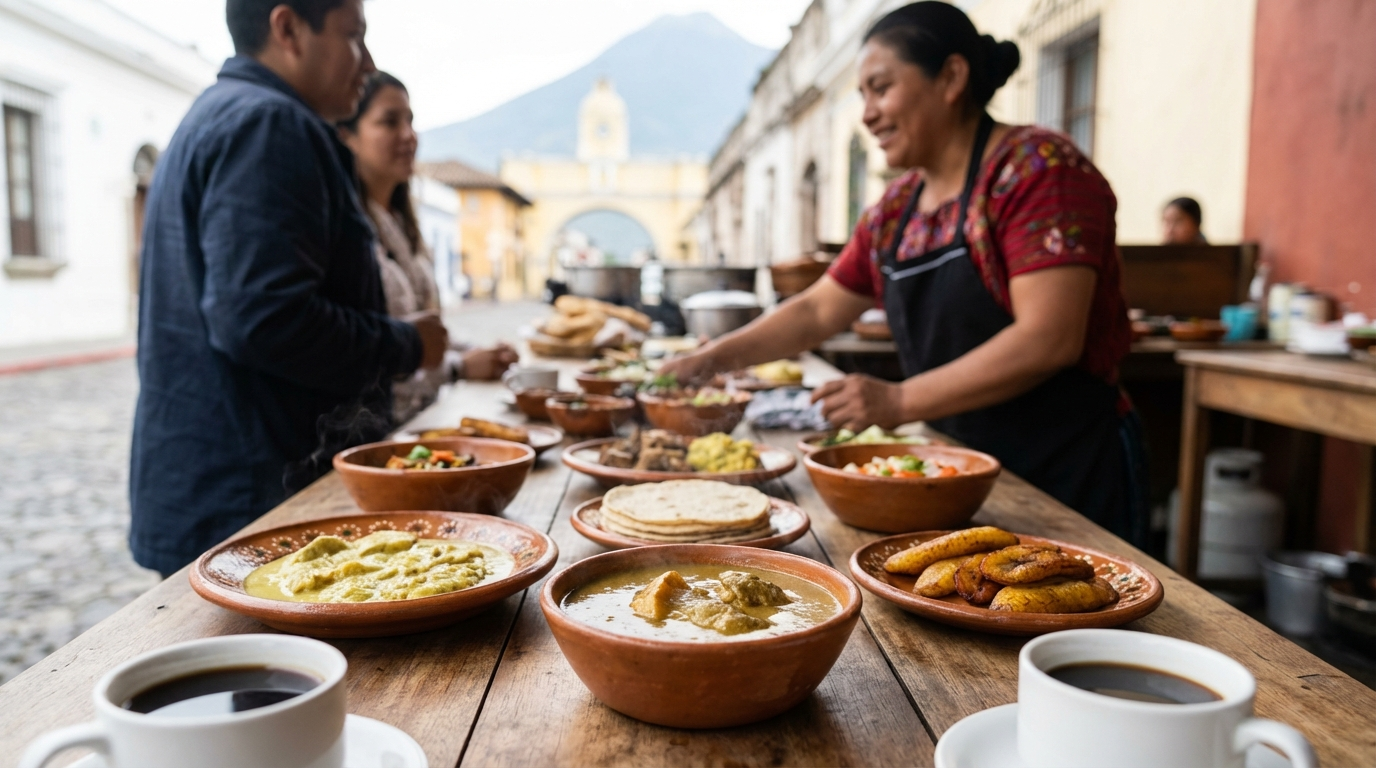
A Food Lover's Guide to Guatemala: 15 Traditional Dishes You Must Try
Explore Guatemala's Rich Culinary Heritage Through Its Most Iconic Dishes
Guatemalan cuisine is a vibrant fusion of ancient Maya traditions and Spanish colonial influences, enriched by the country's incredible agricultural diversity. From hearty highland stews to coastal seafood preparations, the food of Guatemala tells the story of a nation's history, geography, and cultural identity. Whether you're planning a trip or simply curious about Central American gastronomy, these fifteen traditional dishes represent the best of Guatemalan cooking and are essential eating for any food-loving visitor.
1. Pepián: Guatemala's National Dish
Widely considered Guatemala's most important culinary treasure, pepián is a thick, richly spiced stew that dates back to pre-Columbian times. This ancient dish combines roasted tomatoes, tomatillos, dried chiles (guaque and pasa), sesame seeds, pepitoria (pumpkin seeds), and a blend of spices into a complex sauce that coats tender pieces of chicken, pork, or beef.
The preparation of pepián is labor-intensive and varies by region and family tradition. The seeds and spices are dry-roasted on a comal (flat griddle) until deeply fragrant, then ground together to form the base of the sauce. Root vegetables like güisquil (chayote), potato, and güicoy (a type of squash) are added to the stew, which simmers slowly until all the flavors meld into something genuinely extraordinary.
Pepián is served with rice and warm corn tortillas, and is most commonly eaten for special occasions and Sunday family dinners. For the most authentic experience, seek it out at comedores (family-run eateries) in Antigua or the highland towns around Lake Atitlán.
2. Kak'ik: The Sacred Turkey Soup
Originating from the Q'eqchi' Maya of Alta Verapaz, kak'ik is a ceremonial turkey soup with deep cultural significance. The name translates roughly to "red broth," referring to the dish's vibrant color derived from tomatoes and dried chiles. This soup was traditionally prepared for important celebrations and rituals, and in 2007, it was declared part of Guatemala's Intangible Cultural Heritage.
Kak'ik features pieces of free-range turkey (chompipe) simmered in a broth flavored with cilantro (both leaf and root), mint, chile cobanero (a smoky dried chile unique to the Cobán region), achiote, tomatoes, and tomatillos. The result is a deeply aromatic, moderately spicy soup with incredible depth of flavor. It's traditionally served with rice, tamales, and fresh tortillas.
The best place to experience kak'ik is in Cobán, the capital of Alta Verapaz, where numerous restaurants specialize in this regional treasure. However, high-quality versions can be found throughout Guatemala, particularly at restaurants focused on traditional cuisine.
3. Jocón: Green Chicken Stew
Jocón is pepián's green counterpart — a beautiful emerald-colored stew that showcases Guatemala's abundance of fresh herbs and green vegetables. The sauce is made from blending tomatillos, green onions, cilantro, and a mild green pepper called miltomate, creating a bright, herbaceous flavor that's distinctly different from the deeper, roasted flavors of pepián.
Chicken pieces are braised in this verdant sauce until tender, and the dish is served with rice and tortillas. Jocón is lighter and fresher than pepián, making it particularly appealing in warmer weather. It's a staple of Guatemalan home cooking and appears regularly on comedor lunch menus throughout the country.
4. Hilachas: Shredded Beef in Tomato Sauce
The name hilachas means "threads" or "rags," referring to the appearance of the beef, which is slowly braised until it can be pulled into thin, tender shreds. These shreds are then simmered in a sauce of roasted tomatoes, tomatillos, and guaque chiles, along with potatoes and carrots.
Hilachas is classic Guatemalan comfort food — hearty, warming, and deeply satisfying. It's one of the most popular dishes at comedores across the country, typically served at lunchtime with rice and tortillas. The dish demonstrates the Guatemalan talent for transforming humble ingredients into something genuinely delicious through patient cooking and careful spicing.
5. Tamales: The Heart of Guatemalan Celebrations
Tamales hold a special place in Guatemalan culture, and the country's versions are distinctive from those found in Mexico or other Central American nations. Guatemalan tamales are typically larger and wrapped in maxán (banana leaves) rather than corn husks, giving them a subtle tropical flavor and a distinctive dark green exterior.
6. Rellenitos de Plátano: Sweet Plantain Treasures
These beloved treats consist of ripe plantain mashed and formed into oval shapes, stuffed with sweetened black bean paste (frijol dulce), and lightly fried until golden. The contrast between the sweet, caramelized plantain exterior and the rich, slightly sweet bean filling is irresistible.
Rellenitos are found at bakeries, market stalls, and street food vendors across Guatemala. They're served warm, sometimes dusted with sugar, and make for an excellent snack or dessert. Despite their simplicity, they represent a perfect balance of flavors and textures that exemplifies Guatemalan culinary ingenuity.
7. Fiambre: The All Saints' Day Masterpiece
Fiambre is Guatemala's most elaborate dish, prepared exclusively for November 1st (Día de los Santos). This extraordinary cold salad combines up to 50 different ingredients, including multiple types of cold cuts, sausages, cheeses, pickled vegetables, olives, capers, baby corn, beets, pacaya (a palm flower), and a vinaigrette dressing.
Each family has its own fiambre recipe, passed down through generations, and friendly debates about whose fiambre is best are a beloved national tradition. The preparation begins days in advance, with the pickling of vegetables and assembly of components. The dish is classified as either "blanco" (white, without beets) or "rojo" (red, with beets), with passionate advocates for each style.
Fiambre is shared among family and friends at cemetery visits on All Saints' Day, making it both a culinary and social tradition that brings communities together in remembrance of loved ones.
8. Caldo de Res: The Sunday Tradition
Caldo de res (beef soup) is Guatemala's quintessential Sunday lunch, a rich and nourishing soup packed with large pieces of beef on the bone, corn on the cob, güisquil, potatoes, carrots, green beans, cabbage, and other seasonal vegetables. The long, slow simmering process produces a deeply flavorful broth that Guatemalans consider both medicinal and soul-restoring.
This is the dish that families gather around on Sunday afternoons, served with rice, fresh tortillas, lime wedges, and chile sauce. It's also a popular hangover remedy, with many Guatemalans swearing by its restorative powers after a Saturday night out. You'll find caldo de res at virtually every comedor and market eatery across the country.
9. Subanik: The Ceremonial Stew of the K'iche' Maya
Subanik is a complex stew originating from the K'iche' Maya of the Quiché department. It combines three different types of meat (typically chicken, pork, and beef) in a rich sauce made from multiple varieties of chiles, tomatoes, and tomatillos. The name comes from the K'iche' word "suban," meaning "to bury," referring to the traditional method of slow-cooking the stew in an earth oven.
Like kak'ik, subanik carries deep cultural significance and is prepared for important ceremonies and celebrations. The layered preparation — each meat cooked separately before combining in the final sauce — creates a complexity of flavor that makes this one of Guatemala's most sophisticated traditional dishes.
10. Enchiladas Guatemaltecas: Not What You'd Expect
If you're expecting the cheese-smothered baked dish familiar from Mexican-American restaurants, Guatemalan enchiladas will surprise you. These are crispy corn tostadas topped with a carefully constructed tower of ingredients: a curtido (pickled beet and cabbage salad), seasoned ground meat, hard-boiled egg slices, cheese, and a mild tomato salsa.
The result is a beautiful, colorful dish that's as much a visual feast as a culinary one. Guatemalan enchiladas are common street food and market fare, particularly popular as an afternoon snack. Each vendor has their own variation, but the essential combination of crunchy base, tangy curtido, and savory toppings remains consistent.
11. Tostadas: Guatemala's Perfect Street Food
Tostadas are one of Guatemala's most ubiquitous street foods — crispy fried corn tortillas topped with various combinations of guacamole, black beans, salsa, shredded chicken, and curtido. They're quick, affordable, and endlessly customizable, making them the ideal snack for exploring markets and town centers.
The most common variety features a smear of black beans, a generous portion of guacamole, and tomato salsa, sometimes with crumbled fresh cheese on top. Street vendors typically have a selection of toppings, and pointing at what looks good is a perfectly acceptable ordering strategy. Tostadas pair perfectly with a glass of fresh horchata or tamarindo.
12. Plátanos en Mole: Sweet Plantains in Chocolate Sauce
This indulgent dish features ripe plantains fried until caramelized, then bathed in a rich chocolate mole sauce made from roasted cacao, cinnamon, sesame seeds, and chiles. It straddles the line between savory and sweet, and is traditionally served during Semana Santa (Holy Week) as part of the elaborate Lenten meals that mark this important celebration.
Plátanos en mole showcase the Maya heritage of Guatemalan cuisine, particularly the ancient tradition of using cacao in savory and semi-sweet preparations. The combination of sweet plantain, bitter chocolate, warm spices, and subtle chile heat is sophisticated and deeply satisfying.
13. Chiles Rellenos: Stuffed Pepper Perfection
Guatemalan chiles rellenos use the mild chile pimiento (similar to a bell pepper), stuffed with a seasoned pork and vegetable mixture, dipped in egg batter, and fried until golden. They're served in a light tomato sauce and eaten with rice and tortillas.
While similar in concept to Mexican versions, Guatemalan chiles rellenos tend to be milder in heat and more focused on the savory filling. The egg batter creates a delicate, puffy exterior that contrasts beautifully with the soft pepper and flavorful stuffing. This dish is a standard offering at comedores and restaurants specializing in traditional cuisine.
14. Atol de Elote: Liquid Corn Gold
Atol de elote is a warm, sweet beverage made from fresh corn, milk, sugar, and cinnamon. The fresh corn kernels are blended and strained to create a thick, creamy drink that tastes like liquid corn pudding — sweet, comforting, and uniquely delicious.
This drink is particularly popular during the corn harvest months (August through November) when fresh elote is at its sweetest. Street vendors throughout Guatemala serve atol de elote in the mornings and evenings, and it's a favorite accompaniment to tamales and other corn-based foods. Variations include atol blanco (white corn atol) and atol de plátano (plantain atol).
15. Garnachas: Petén's Beloved Snack
Originating from the Petén department in Guatemala's north, garnachas are small, thick corn tortillas topped with a seasoned tomato and meat sauce, pickled onions, and crumbled cheese. They're similar in concept to tostadas but with a thicker, softer base that's more like a small sope.
If you're visiting Tikal or Flores, garnachas are an essential local experience. They're typically served in sets of three or four as a snack or light meal, and their simple but satisfying combination of flavors perfectly represents the straightforward, honest cooking of Guatemala's lowland region.
Where to Find the Best Traditional Food
While upscale restaurants in Antigua and Guatemala City serve refined versions of traditional dishes, the most authentic and satisfying experiences are often found at humble comedores, market stalls, and street vendors. Don't be afraid to eat where the locals eat — busy comedores with high turnover serve fresh, flavorful food at incredibly low prices. Market comedores, particularly at the Mercado Central in Guatemala City and the markets in Chichicastenango and Sololá, offer the widest variety of traditional dishes in one location. Follow the crowds, trust your instincts, and prepare to fall in love with one of Central America's most underappreciated cuisines.
Artículos relacionados
Trámites del IGSS Guatemala 2026: Guía Completa de Pensiones, Prestaciones y Afiliación
Guía actualizada 2026 de trámites IGSS Guatemala: pensión por vejez, subsidios por maternidad e incapacidad, afiliación. Requisitos y pasos.

IGSS vs Seguro Médico Privado Guatemala 2026: ¿Cuál Conviene Más?
Comparativa completa IGSS vs seguro médico privado en Guatemala 2026. Costos, coberturas, ventajas y desventajas. ¿Cuál es mejor para tu familia?

Turismo Guatemala Novedades: Lo Más Reciente para Tu Próxima Aventura
Guatemala, el Corazón del Mundo Maya, se reinventa constantemente para ofrecer a sus visitantes experiencias únicas. Exploramos las últimas novedades en turismo que transformarán tu próxima aventura.

Tráfico Guatemala Hoy: Rutas Alternas y Guía para Navegar la Ciudad
Navegar el tráfico en Guatemala puede ser un desafío diario. Esta guía te ofrece las mejores rutas alternas, herramientas y consejos para optimizar tu tiempo y evitar la congestión.